

Table of Contents
- Why Vinyl Signage Fades: UV Radiation and Material Breakdown
- Choosing the Right Vinyl: Cast vs. Calendered for Outdoor Durability
- UV Protection for Vinyl Signs: Overlaminates, Coatings, and Inks
- Realistic Vinyl Sign Lifespan: What to Expect from Your Materials
- Signage Maintenance Best Practices: Cleaning, Inspection, and Care
- Strategic Placement and Climate Considerations for Fade Prevention
- DIY vs. Professional Application: What Affects Long-Term Fade Resistance
- Frequently Asked Questions
Last Updated: September 27, 2026
Why Vinyl Signage Fades: UV Radiation and Material Breakdown
Outdoor vinyl signage typically lasts three to five years under average UV exposure before fading, edge lifting, or adhesive failure sets in, according to Winsor Fireform's analysis of outdoor sign durability. Understanding how to prevent vinyl signage fading starts with knowing what actually breaks the material down, since vinyl signage fading rarely comes from a single cause. UV radiation is the primary enemy, not rain or temperature swings.
How UV Exposure Causes Photodegradation
Photodegradation is the process where ultraviolet radiation breaks down the molecular bonds in vinyl, causing pigments to lose color and the material itself to become brittle. This isn't surface-level damage you can wipe away. The sun's UV rays penetrate the vinyl and attack the chemical structure from within.
The damage happens in stages:
- UV rays hit the vinyl surface and break pigment bonds
- Colors shift, usually reds and yellows first
- The vinyl itself weakens and loses flexibility
- Cracks form and moisture gets inside
Signs of Degradation: Edge Lifting, Cracking, and Adhesive Failure
Edge lifting usually shows up first. The corners peel back, letting water and dirt underneath. Once that happens, the adhesive starts to fail and the sign is on borrowed time.
Watch for these warning signs:
- Edge lifting: Corners or edges peel away from the surface
- Cracking: Small fissures appear, especially in cold weather
- Adhesive failure: The vinyl slides or falls off entirely
- Color shift: Faded or washed-out appearance
Choosing the Right Vinyl: Cast vs. Calendered for Outdoor Durability
Cast vinyl is the better choice for outdoor signs that need to last. It's thinner, more flexible, and resists UV damage far better than calendered vinyl. The trade-off is cost, but for signs exposed to direct sun, cast vinyl pays for itself.
Here's how they compare:
| Feature | Cast Vinyl | Calendered Vinyl |
|---|---|---|
| Thickness | 2 mil | 3-4 mil |
| Outdoor lifespan | 5-7 years | 3-5 years |
| UV resistance | Excellent | Moderate |
| Best for | Vehicle wraps, long-term signs | Short-term promotions |
| Cost | Higher | Lower |
UV Protection for Vinyl Signs: Overlaminates, Coatings, and Inks
A UV-protective overlaminate is the single most effective way to extend vinyl sign life. This clear film goes over the printed vinyl and blocks the UV rays that cause fading. Think of it as sunscreen for your signage.
The Role of Protective Overlaminates
Overlaminates add years to a sign's life. A quality cast laminate film can extend UV protection by four years or more. The Signs Safety Surveys guide to safety sign materials recommends pairing digital latex printing with 7-year grade polymeric vinyl and a matched UV-protective laminate for maximum durability.
UV-Resistant Ink Types: Eco-Solvent vs. UV-Cured
Ink choice affects fade resistance as much as vinyl choice. Water-based inks break down within six months outdoors, according to Print Basics' overview of outdoor ink performance. That's not a material defect; it's simply the wrong ink for the job.
The two best options for outdoor work:
- Eco-solvent ink: Soaks into the vinyl for good pigment stability
- UV-cured ink: Cures instantly under UV light and resists fading well
Why Red and Yellow Fade First: Color-Specific Fade Rates
Not all colors fade at the same speed. Organic pigments, which produce the brightest reds, oranges, and yellows, are more vulnerable to UV breakdown than inorganic pigments like titanium dioxide (white) or iron oxide (black and brown). This is why a red logo often looks pink or washed out while the black text next to it still looks sharp.
What this means for design choices:
- Avoid large areas of pure red or yellow on signs that will face direct sun for years. Use them as accents instead of backgrounds.
- Pair bright colors with a UV overlaminate rather than relying on the ink alone.
- Consider a darker background with light text for long-term outdoor signs. Black, dark blue, and dark green backgrounds hide fade better than light or bright backgrounds.
- If brand colors are non-negotiable, plan for a shorter replacement cycle or specify a higher-grade cast vinyl with a cast laminate.
Realistic Vinyl Sign Lifespan: What to Expect from Your Materials
A well-made vinyl sign with cast vinyl, UV-resistant ink, and a protective overlaminate can last five to eight years outdoors. That's the realistic range, not the marketing hype. Signs in harsh climates or direct sun will land on the shorter end.
Signage Maintenance Best Practices: Cleaning, Inspection, and Care
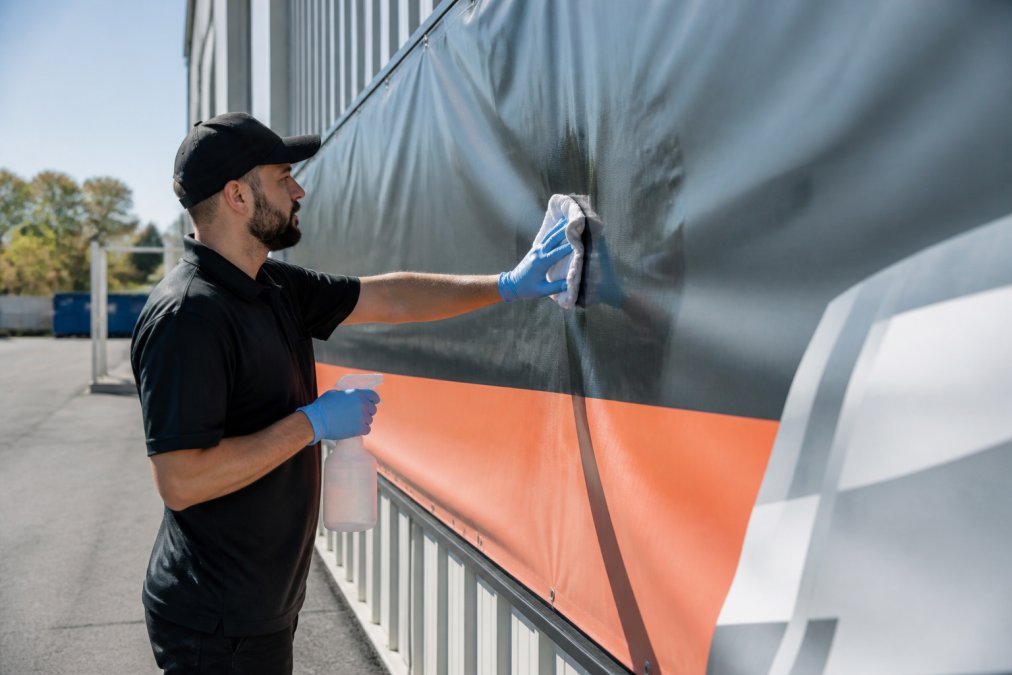
How to Clean Vinyl Signs Without Causing Damage
Follow these steps to clean safely:
- Rinse the sign with plain water to remove loose dirt
- Mix a few drops of mild dish soap in a bucket of water
- Wipe gently with a soft cloth or sponge
- Rinse thoroughly with clean water
- Dry with a soft towel to prevent water spots
Never use abrasive cleaners, pressure washers, or solvents like acetone. These strip the protective coating and speed up degradation. For stubborn spots, isopropyl alcohol on a soft cloth works, but use it sparingly.
Strategic Placement and Climate Considerations for Fade Prevention
Shade is your best free defense against fading. Signs placed under awnings, inside recessed areas, or within sign cabinets get less direct sun exposure and last longer, according to Econoline Signs' fade prevention recommendations. Even partial shade during peak sun hours makes a measurable difference.
Climate matters too:
- Desert Southwest: Highest UV index, fastest fading, plan for shorter lifespans
- Coastal areas: Salt air plus sun equals double trouble; clean more often
- Northern states: Less intense UV but freeze-thaw cycles stress edges
- Humid South: Moisture and heat accelerate adhesive breakdown
DIY vs. Professional Application: What Affects Long-Term Fade Resistance
Professional installation isn't just about looks. It directly affects how long a sign resists fading. A poorly applied sign has air bubbles, weak adhesion, and edges that lift within months. Each of those issues lets UV damage and moisture in faster.
What pros do differently:
- Surface preparation: Clean, degrease, and prime the substrate properly
- Application technique: Use squeegees and heat to ensure full adhesion
- Edge sealing: Seal edges to block moisture and UV penetration
DIY UV Protection: Aftermarket Sprays and Films
If you're cutting vinyl with a desktop cutter or applying pre-printed stickers, you can still add UV protection after the fact. The two main options are spray-on UV coatings and aftermarket laminating films.
- Clean the vinyl with isopropyl alcohol and let it dry completely.
- Work in a dust-free, shaded area. Direct sun causes the spray to dry too fast and leave a hazy finish.
- Apply two to three thin coats, waiting 10 to 15 minutes between coats. One heavy coat will run and crack.
- Let it cure for 24 hours before exposing it to weather.
- Use a felt-tipped squeegee and a slip solution (a few drops of dish soap in water) to position the film.
- Work from the center out to push air bubbles to the edges.
- Post-heat the edges with a heat gun to activate the adhesive and seal the film.
- Trim flush with the vinyl edge, then seal the edge with a clear edge sealant if the sign will face rain.
When DIY Is Enough and When It Isn't
DIY UV protection makes sense for:
- Small decals and stickers that will be replaced within a year or two
- Temporary promotional signs
- Signs in partial shade or low-UV climates
Go professional when:
- The sign is a vehicle wrap or a large building sign
- The sign faces direct sun all day
- The sign carries brand-critical colors like red or yellow
- You need a warranty on the vinyl and laminate
The cost difference is real, but so is the lifespan difference. A professionally applied cast vinyl with a cast laminate can outlast a DIY spray-coated calendered vinyl by three to four years in full sun. If the sign is an investment, treat the application as part of the investment.
Frequently Asked Questions
How long does a vinyl sign last outdoors?
Outdoor vinyl signage typically lasts 3 to 5 years under average UV exposure before significant fading, edge lifting, or adhesive failure occurs, according to Winsor Fireform (2026). Vehicle wraps using cast vinyl and protective laminates can last 5 to 7 years. Exterior sign replacement cycles are estimated at 5 to 8 years. Using cast vinyl, UV-resistant inks, and a protective overlaminate extends lifespan toward the higher end of these ranges.
What is the best UV protection for vinyl signs?
The recommended standard combines digital latex printing, 7-year grade polymeric vinyl, and a matched UV protective laminate, per Signs Safety Surveys (2026). A clear coat with UV absorbers, such as One Shot Speed Dry UV Acrylic 4005, also helps protect against color fading on PVC pressure-sensitive vinyl. Oraguard 290Gf optically clear laminating film adds a UV protection extension factor of 4 years and is designed for transparent applications.
Does cleaning prevent UV fading on vinyl signs?
Cleaning removes dirt and chemical deposits that trap heat and accelerate UV damage, but it does not stop the molecular degradation caused by UV exposure itself, according to Econoline Signs (2026). Regular cleaning every 3 to 6 months is still essential for aesthetics, identifying early damage, and slowing surface-level deterioration. Pair cleaning with UV-resistant materials and protective coatings for the best results.
What is the difference between cast and calendered vinyl for outdoor use?
Cast vinyl is thinner, more conformable, and resists UV degradation longer, making it the preferred choice for outdoor signage and vehicle wraps. Calendered vinyl costs less but tends to shrink and fade faster under sun exposure. For applications where vinyl sign lifespan matters, cast vinyl paired with a protective overlaminate delivers superior outdoor durability and color fastness.
Vinyl signage fading is preventable, but it requires the right materials, proper installation, and a maintenance routine. McLogan has supplied professional-grade signage materials since 1922, and our team can help you choose the right vinyl, laminate, and ink for your climate and application. With expert guidance and a full range of products, we make it easier to deliver signs that last. Get started with McLogan and give your clients signage that holds its color for years.


