
Table of Contents
- Why Screen Printing Alternatives Matter
- Screen Printing Equipment Suppliers: What to Compare
- Screen Printing Ink and Supplies: Core Categories
- Screen Printing Starter Kit Options
- Comparing Supply Providers by Use Case
- Key Factors in Choosing a Screen Printing Supply Provider
- Frequently Asked Questions
Last Updated: October 21, 2026
Why Screen Printing Alternatives Matter
Finding the right screen printing alternatives for supplies can make the difference between a thriving operation and one that struggles. Whether you're starting your first print shop, scaling production, or expanding into new decoration methods, your supplier shapes everything from print quality to profitability. The supplier you choose determines not just product availability, but the expertise and support you'll access when problems arise.
Screen printing remains one of the most reliable, cost-effective methods for apparel decoration and promotional products, but the industry has fragmented. Options are now tailored to different business sizes, production volumes, and decoration needs, so understanding what separates one supplier from another requires knowing exactly what you're comparing.
This guide breaks down the core categories of screen printing supplies and helps you match your business type to the best available options.
Screen Printing Equipment Suppliers: What to Compare
When evaluating screen printing equipment suppliers, focus on five core factors: product range, pricing structure, shipping and minimum orders, technical support, and compatibility with your existing equipment.
Product range matters most. A supplier that stocks screens, inks, emulsion, and exposure equipment under one roof saves time and reduces the risk of incompatible materials.
Pricing structure reveals how a supplier thinks about their market. Some charge premium prices for superior quality or faster shipping; others compete on volume discounts that only benefit shops with consistent large orders.
Shipping and minimum orders directly impact your cash flow and inventory management. Some suppliers ship within 3 business days; others take weeks. Some have no minimums; others require $500+ orders.
Technical support becomes critical when troubleshooting a failed screen burn or ink adhesion problem mid-production. Knowledgeable staff who understand your equipment can save hours and prevent costly mistakes.
Equipment compatibility is often overlooked until it's too late.
Screen Printing Ink and Supplies: Core Categories
Screen printing ink and supplies fall into distinct categories, each serving a specific function in your workflow. Understanding them helps you identify what you actually need versus what sounds necessary.
Plastisol Inks and Adhesives
Plastisol inks dominate apparel printing because they're forgiving, vibrant, and work on both light and dark fabrics without pre-treatment. They stay wet on the screen longer than water-based alternatives and cure with heat.
The 7014 Legacy White 2.0 from McLogan is a high-performance plastisol for manual and automatic presses. It delivers exceptional opacity while minimizing dye migration on cotton-poly blends, cures between 300°F and 325°F, and requires reduced squeegee pressure, less operator fatigue on manual presses and extended screen life on automated equipment.

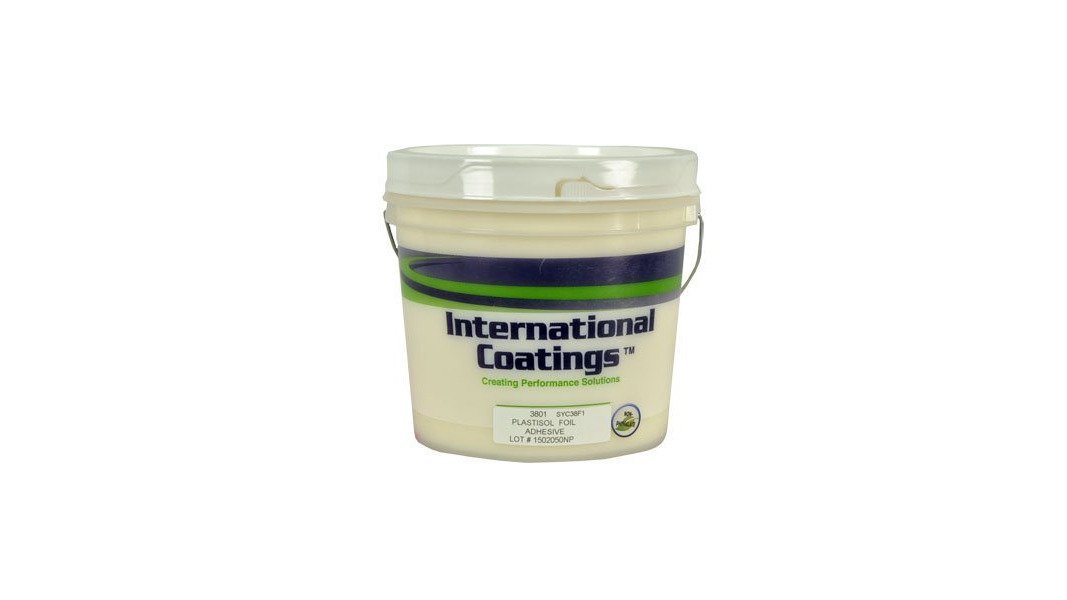
Foil adhesives open a premium design category. The Plastisol Foil Adhesive - 3801 enables metallic foil effects on light and dark garments: print the adhesive, cure it partially, apply the foil, then cool and remove the carrier. The shimmering, durable finish can enhance designs.
Emulsion and Film for Screen Exposure
Emulsion is the light-sensitive coating that hardens on mesh when exposed to UV light, creating your stencil. Poor emulsion leads to stencil breakdown, pinholes, and failed prints.
The Ulano QTX Photopolymer Emulsion from McLogan is a ready-to-use, presensitized formula designed for screen printing with plastisol inks. Its 46% solids content helps build stencil thickness and bridge coarse mesh, while fast drying and ultra-fast exposure help streamline screen preparation. No diazo mixing is required, and its durable stencils reclaim easily, making QTX a practical choice for busy apparel printing shops.
Film quality plays a key role in producing clean, accurate screen printing positives. McLogan Waterproof Inkjet Film 4 MIL features a microporous coating that dries quickly and delivers sharp detail for halftones and color separations. Compatible with Epson, HP, and Canon inkjet printers, it’s a reliable choice for preparing crisp film positives for screen exposure.The choice between laser and inkjet film depends on your imaging workflow.
Screens and Masking Tools
Pre-exposed screens save time and eliminate the exposure-to-screen variability that frustrates many shops. McLogan's Pre-Exposed 20X24 Aluminum Frame ($63.65) offers a 12.5" x 16" print area, ideal for standard apparel placement like chest prints and small back graphics. The Pre-Exposed 23X31 Aluminum Frame ($67.20) provides a larger 17" x 23" print area for bigger designs or multiple-color setups.
Pre-exposed screens eliminate guesswork: upload your artwork, specify mesh count, and receive a production-ready screen. This is especially valuable for shops without in-house exposure capability or those needing consistent quality across dozens of screens.
White Screen Tape - 2" X 110yd at $7.70 masks the edges of screens after emulsion application. The extended length (110 yards) means you can tape more screens before changing rolls. It leaves no residue and removes cleanly, critical for maintaining screen reusability.
Cleanup supplies matter as much as production supplies. McLogan Textile Press Wash helps remove plastisol ink from screens during press cleanup, making routine maintenance easier and helping your shop prepare for the next print job. Wooden Stir Sticks at $0.19 each are cheap insurance against inconsistent ink viscosity.
Screen Printing Starter Kit Options
A true starter kit bundles screens, basic inks, emulsion, and tools into a coherent package. The challenge is finding one that doesn't sacrifice quality to hit a price point.
McLogan's pre-exposed screen options work well as starter components. A beginner might start with one 20X24 frame ($63.65) paired with a single plastisol ink like the Legacy White 2.0 ($47.20) and a gallon of emulsion ($46.86).

Building your own kit offers flexibility: you choose mesh count based on your designs, select ink colors that match your market, and aren't forced to buy supplies you won't use.
For shops expanding into foil effects, adding the Plastisol Foil Adhesive ($45.21) and learning the technique opens a new revenue stream. Foil can enhance custom orders.
Pre-Exposed 23X31 Aluminum Frame →
The real cost of a starter kit isn't the supplies, it's the learning curve. Budget time for test prints, screen burn failures, and ink consistency problems, and choose a supplier whose staff can guide you through mesh selection, exposure timing, and ink viscosity.
Comparing Supply Providers by Use Case
Different business models require different supplier characteristics. A one-person hobbyist operation has completely different priorities than a 10-person production shop.
For Small Shops and Hobbyists
Small operations prioritize affordability and no minimum orders, needing flexibility to buy single units, test new products, and scale gradually without overcommitting capital.
McLogan supports this model. Pre-exposed screens eliminate expensive exposure equipment, you can order one screen at a time, and pricing is transparent and per-unit. Acetone, tape, and stir sticks are priced for individual use, not bulk, valuable when you're still learning which products work best.
The tradeoff: per-unit costs are higher than bulk pricing. If you're printing 500 shirts per month, buying ink by the gallon is more economical than buying smaller quantities.
Small shops also benefit from expert guidance. When you're new to screen printing, the difference between 110 mesh and 160 mesh isn't obvious, and understanding why emulsion fails or ink doesn't adhere requires experience. Knowledgeable staff can assist with your learning and help prevent costly mistakes.
For Production Shops Scaling Up
Production shops running 500+ prints per month need volume discounts, consistent supply, and reliable lead times. Your supplier must handle large orders without delays.
At this scale, you're likely running multiple presses, burning dozens of screens weekly, and managing inventory across multiple ink colors. You need suppliers who understand production workflows and support rapid turnaround.
McLogan's pre-exposed screen service ships within 3 business days, which works for planned production but may not accommodate rush orders. For shops with in-house exposure capability, bulk emulsion purchases (1 gallon or larger quantities) make economic sense. The Ulano RLX emulsion is formulated for high-speed production, which aligns with production shop needs.

Volume pricing becomes critical. At production scale, volume discounts and tiered pricing directly impact profitability.
For Apparel Decorators and Promotional Products
Apparel decorators and promotional product shops often work with multiple decoration methods: screen printing, heat transfer, embroidery, and direct-to-film printing. Your supplier must integrate with this mixed workflow.
Screen printing is suitable for large runs of single-color or limited-color designs on apparel. Heat transfer works for photo-quality, full-color designs on small quantities. Understanding when to use each method, and having suppliers for each, can help maximize quality and profitability.
McLogan's foil adhesive opens a premium category for apparel decorators. Metallic effects on promotional products can differentiate your shop. The ability to offer foil-enhanced designs expands your service menu without requiring entirely new equipment.
Use Case |
Key Priority |
Ideal Supplier Characteristics |
|---|---|---|
Hobbyist/Small Shop |
Affordability, no minimums, learning support |
Per-unit pricing, expert guidance, small quantities available |
Production Shop |
Volume discounts, fast lead times, consistency |
Bulk pricing, rapid turnaround, reliable inventory |
Apparel Decorator |
Versatility, premium effects, quality |
Multiple decoration methods, specialty inks/adhesives, technical support |
Key Factors in Choosing a Screen Printing Supply Provider
When evaluating screen printing alternatives for supplies, these factors separate good choices from bad ones.
Product availability and quality consistency matter more than price alone. A cheap supplier that runs out of your ink color mid-production costs far more than premium pricing from a reliable vendor.
Shipping speed and flexibility directly impact your production schedule.
Technical support and expertise become invaluable when something fails. Staff who understand screen burning, mesh selection, ink chemistry, and equipment compatibility can diagnose problems over the phone.
Compatibility with your existing equipment is non-negotiable. Inks designed for one press type may not perform identically on another. Emulsion exposure times vary by equipment. Screen frame sizes must fit your presses.
Pricing transparency matters. Hidden fees, surprise minimum orders, or unclear bulk discounts create frustration. Good suppliers publish clear pricing, explain minimums upfront, and offer volume discounts.
Choosing the right screen printing alternatives for supplies requires matching your business model to a supplier built for that scale. McLogan has served screen printing shops, apparel decorators, and promotional product businesses since 1922.
Frequently Asked Questions
What are the best screen printing alternatives for supplies if I'm just starting out?
Beginners benefit from starter kits that include pre-exposed screens, basic emulsion, and plastisol ink. McLogan offers pre-exposed aluminum frames (20x24 at $63.65 or 23x31 at $67.20) paired with Ulano RLX Universal Dual Cure Emulsion ($46.86) and 7014 Legacy White 2.0 Plastisol Ink ($47.20). These components work together seamlessly, eliminating compatibility concerns and reducing setup complexity. Screen printing starter kits typically bundle screens, squeegees, and essential chemicals to minimize guesswork.
How do screen printing ink and supplies compare across different suppliers?
Quality screen printing ink and supplies vary by formulation, durability, and compatibility with your equipment. Plastisol inks like Legacy White 2.0 offer low-bleed performance and flexible curing (300-325°F), making them suitable for both automatic and manual presses. Emulsions like Ulano RLX provide high solids content for better stencil build and faster drying. When comparing providers, verify that inks work with your existing screens and that emulsion shelf life meets your production schedule. Acetone solvents ($8.07) and screen tape ($7.70) are consumables worth stocking from reliable suppliers.
What equipment and tools do I need from a screen printing equipment supplier?
Core equipment includes pre-stretched aluminum screens (available in multiple sizes), a squeegee matched to your screen size, emulsion coating tools, and exposure units. McLogan's pre-exposed screens come with recommended squeegee sizes (15" for 20x24 frames, 18" for 23x31 frames) to ensure proper print quality. Additional shop tools include stir sticks ($0.19 each) for ink mixing, screen tape for masking, and acetone for cleanup. A professional screen printing equipment supplier should provide technical guidance on mesh count selection and screen maintenance to extend equipment life.
Can I find blank products suitable for printing from a single screen printing supply provider?
Many screen printing suppliers focus on inks, emulsions, screens, and tools rather than blank apparel. However, established providers often maintain relationships with blank product vendors and can recommend compatible options for T-shirts, tote bags, pillows, and other items. When choosing a supplier, ask about their network and whether they stock or can source blank products. This simplifies your supply chain and ensures that materials are compatible with your screen printing workflow and equipment.


