

Table of Contents
- Understanding Screen Printing Ink Types and Compatibility
- Screen Printing Ink for Fabric: Matching Ink to Textile Fiber
- Water-Based vs Plastisol Ink: Key Differences and Trade-offs
- Screen Printing Ink for Polyester: Addressing Dye Bleeding
- Screen Printing Ink Curing Temperature and Production Controls
- Compatibility Testing and Troubleshooting
- Building Your Ink Selection Framework
- Conclusion
- Frequently Asked Questions
Last Updated: October 16, 2026
Understanding Screen Printing Ink Types and Compatibility
Choosing compatible screen printing inks starts with understanding which ink systems work best for your specific fabric and production needs. Not every ink works equally well on every textile. Cotton requires different chemistry than polyester.
At McLogan, we help screen printers navigate these choices every day. The right ink selection impacts print quality, durability, production speed, and cost. Get it wrong, and you'll face adhesion problems, dye bleeding, poor hand feel, or failed washability tests.
Plastisol Ink: Characteristics and Best Uses
Plastisol ink is a PVC-based system that cures through heat, not air drying.
Plastisol works best on cotton and cotton blends. It delivers vibrant colors and soft hand feel when properly cured.
Key benefits of plastisol:
- Bold, opaque colors
- Excellent coverage on dark fabrics
- Soft hand feel when cured properly
The main limitation: plastisol can cause dye bleeding on polyester if cure temperatures run too high.
FN-INK Screen Printing Plastisol Ink from McLogan delivers bold colors and creamy printability at a competitive price point.

Water-Based Ink: Environmental and Performance Benefits
Water-based ink uses water as its carrier instead of PVC. It absorbs into fabric fibers, creating a print that feels soft and breathable.
Water-based inks work on cotton, cotton blends, and most synthetic fabrics. They're ideal when soft hand feel matters, athletic wear, fashion apparel, and premium garments.
Advantages of water-based inks:
- Soft, breathable hand feel
- Environmentally friendly formulation
- Lower cure temperatures
Trade-offs to consider:
- Slightly lower opacity than plastisol
- Longer cure times on some fabrics
- Requires proper screen maintenance (water-based inks dry on mesh)
Permaset Aqua Standard Waterbased Textile Ink offers strong rub resistance and vibrant color on cotton and synthetic blends.
Discharge and Sublimation Inks: Specialty Applications
Discharge ink removes dye from fabric rather than adding color on top. It works only on dyed cotton and cotton-rich blends. The ink chemically discharges the fabric's original dye, replacing it with a new color or white space.
Discharge is ideal for:
- Vintage or distressed looks
- Soft hand feel on dark cotton
- Premium apparel where hand feel is critical
Sublimation ink transfers dye directly into polyester fibers using heat and pressure. The ink doesn't sit on the surface, it becomes part of the fiber itself. This creates permanent color that won't crack, peel, or fade with washing.
Sublimation works only on polyester and polyester-coated materials. It's perfect for:
- Performance athletic wear
- Polyester home goods
- Custom merchandise with photo-quality detail
Screen Printing Ink for Fabric: Matching Ink to Textile Fiber
The fiber content of your fabric determines which inks will adhere properly and deliver the durability you need. Cotton, polyester, and blends each have different chemical properties that affect ink performance.
Cotton and Cotton-Blend Compatibility
Cotton fibers absorb ink readily. Plastisol and water-based inks both work well on 100% cotton. The key is matching cure temperature to the fabric's dye characteristics.
On 100% cotton:
- Plastisol ink cures at 260-320°F with excellent adhesion
- Water-based ink cures through heat or air drying with soft hand feel
- Discharge ink removes the cotton's natural dye for a soft, pale print
Cotton blends (cotton + polyester) require more care. The polyester portion sets its dyes at 270-300°F. If your cure temperature exceeds that range, dyes migrate into the ink, causing unwanted color shifts.

Best practice for cotton blends:
- Use plastisol formulations designed for lower cure temperatures (260°F or below)
- Test cure temperature on a small sample before full production
- Consider water-based ink for maximum control over heat exposure
- Flash at lower temperatures to avoid heat creep
Synthetic Fabrics: Polyester, Nylon, and Blends
Polyester doesn't absorb ink the way cotton does. Plastisol and water-based inks sit on the surface. This means adhesion depends on proper curing and screen tension.
On 100% polyester:
- Plastisol ink works but requires careful temperature control
- Water-based ink works well and feels soft
- Sublimation ink bonds directly with fibers for permanent color
- Dye bleeding is the primary risk with plastisol above 270°F
Nylon blends present similar challenges. The fibers are smooth and don't absorb ink readily. Adhesion depends on proper flash and cure cycles.
For polyester and nylon:
- Keep cure temperatures below 270°F to prevent dye bleeding
- Ensure adequate flash time to set the ink between passes
- Use higher mesh counts for better ink deposit control
- Consider water-based or discharge alternatives if hand feel is important
Water-Based vs Plastisol Ink: Key Differences and Trade-offs
Both ink systems deliver quality results, but they excel in different situations.
| Factor | Plastisol | Water-Based |
|---|---|---|
| Cure Method | Heat (260-320°F) | Heat or air dry |
| Hand Feel | Thick, slightly stiff | Soft, breathable |
| Opacity | Excellent | Good (may need underbase on dark fabric) |
| Fabric Compatibility | Cotton, cotton blends | Cotton, synthetics, blends |
| Environmental Impact | PVC-based, higher footprint | Water-based, lower footprint |
| Cleanup | Solvent-based | Water-soluble |
| Cost | Moderate | Slightly higher |
| Dye Bleeding Risk | High on polyester above 270°F | Minimal |
Choose plastisol when:
- You need maximum opacity and coverage
- Budget is a primary concern
- You're printing on 100% cotton
- High-volume production demands speed
Choose water-based when:
- Soft hand feel is required
- Environmental impact matters
- You're printing on polyester or blends
- You need minimal cleanup
Screen Printing Ink for Polyester: Addressing Dye Bleeding
Dye bleeding is the most common compatibility problem when printing plastisol ink on polyester.
The chemistry is straightforward: polyester dyes are heat-set into fibers during fabric manufacturing. When you apply heat above the dye's set temperature, the dyes become mobile.
Prevention strategies:
FN-INK Screen Printing Plastisol Ink →
- Keep cure temperature at 260°F or below
- Use plastisol formulations designed for lower-temperature curing
- Flash at lower temperatures (180-200°F) to minimize heat exposure
- Test on a small sample before committing to production
If dye bleeding occurs during production:
- Lower your cure temperature immediately
- Increase flash time to allow ink to set between passes
- Switch to a plastisol formulation rated for polyester
- Evaluate water-based or discharge ink alternatives
FN-INK Screen Printing Plastisol Ink cures at 260°F, keeping temperatures low enough to prevent dye bleeding on polyester blends. The formulation is designed specifically to balance cure speed with temperature control.
Screen Printing Ink Curing Temperature and Production Controls
Proper curing is non-negotiable. Under-cured ink fails washability tests and adhesion checks. Over-cured ink can damage fibers and cause dye bleeding. The goal is reaching the correct temperature throughout the entire ink layer.
Flash and Cure Temperatures by Ink Type
Plastisol ink:
- Flash: 180-200°F for 3-5 seconds
- Cure: 260-320°F depending on formulation
- Target: Ink temperature reaches cure point throughout the layer
Water-based ink:
- Flash: 160-180°F for 3-5 seconds
- Cure: 160-200°F or air dry (depends on formulation)
- Target: Moisture evaporates completely from ink film
Discharge ink:
- Flash: 160-180°F
- Cure: 300-320°F
- Target: Chemical reaction completes; dye is fully discharged
Temperature control matters most on polyester and blends. Too hot, and dyes bleed. Too cool, and ink doesn't cure.
Dwell Time and Production Variables
Dwell time is how long the fabric stays in the dryer. It depends on:
- Ink type and formulation
- Fabric weight and fiber content
- Dryer temperature and airflow
- Desired cure level
A typical dwell time for plastisol on cotton is 2-4 minutes at 260°F. On polyester, reduce dwell time and temperature to minimize dye bleeding risk.
Production variables that affect curing:
- Belt speed through the dryer
- Dryer temperature consistency
- Ink film thickness (heavier deposits need longer cure)
- Fabric thickness and density
Monitor your dryer's actual temperature, not just the dial setting. Use a thermocouple or infrared thermometer to verify heat at the fabric level. Many production problems trace back to a dryer that reads 300°F but actually runs 320°F.
Compatibility Testing and Troubleshooting
Before running a full production job, test your ink-fabric combination on a small sample. This catches problems early and saves waste.
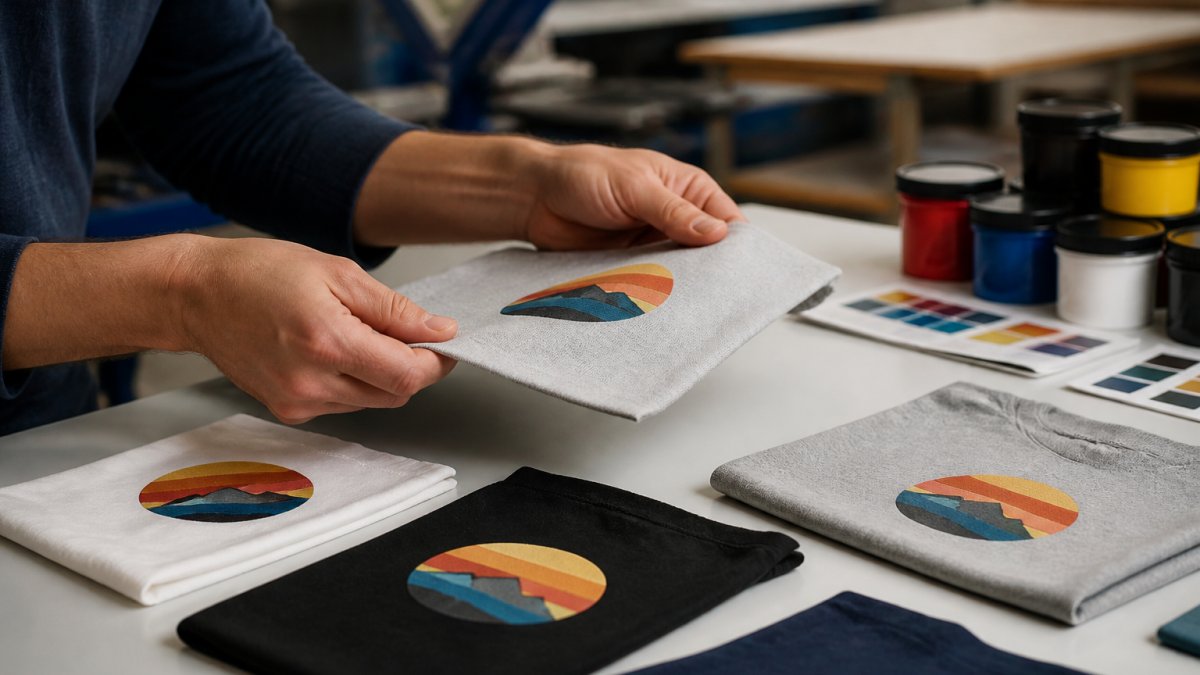
Basic compatibility test:
- Print your design on a small piece of the actual fabric you'll use
- Cure using your standard production parameters
- Let the sample cool completely
- Perform a hand rub test: rub the print firmly with your thumb for 30 seconds
- Wash the sample in warm water with detergent
- Dry and inspect for color loss, cracking, or peeling
What to look for:
- Ink adhesion: Does it crack or flake when bent?
- Color bleed: Did the ink color shift or muddy?
- Washability: Did color fade or wash out?
- Hand feel: Is the print too stiff or too soft?
If the test fails:
- Adjust cure temperature (usually lower for polyester, higher for heavy cotton)
- Increase flash time between passes
- Try a different ink formulation designed for your fabric
- Test a different ink type (water-based instead of plastisol, for example)
Common failures and fixes:
- Ink flakes when bent → under-cured; increase temperature or dwell time
- Color muddy or shifted → dye bleeding; lower temperature or switch to water-based
- Ink washes out → under-cured or wrong ink type for fabric
- Print feels too stiff → consider water-based ink for softer hand feel
Building Your Ink Selection Framework
Make ink selection systematic rather than reactive. Use this framework to match ink type to job requirements.
Step 1: Identify fabric fiber content
- 100% cotton → plastisol or water-based both work
- Cotton blend → test for dye bleeding; consider lower-temperature plastisol or water-based
- 100% polyester → water-based, sublimation, or low-temperature plastisol
- Nylon or specialty fibers → test first; water-based is usually safest
Step 2: Define required hand feel
- Soft, breathable → water-based or discharge
- Thick, opaque coverage → plastisol
- Permanent, fade-proof → sublimation (polyester only)
Step 3: Determine production volume and speed
- High volume, fast production → plastisol (quick cure)
- Lower volume, premium quality → water-based or discharge
- Photo-quality detail → sublimation
Step 4: Consider environmental and cost factors
- Budget-conscious → plastisol
- Eco-conscious → water-based
- Premium pricing allowed → discharge or sublimation
Step 5: Test before committing
- Print a sample on actual fabric
- Run your standard cure cycle
- Perform hand rub and wash tests
- Adjust temperature or switch ink types if needed
This framework prevents costly mistakes and ensures every job delivers the quality your customers expect.
Conclusion
Choosing compatible screen printing inks requires understanding ink chemistry, fabric properties, and how they interact during curing. Plastisol delivers opaque coverage and fast production on cotton. Water-based ink offers soft hand feel and works across most fabrics.
The most common mistake is ignoring dye bleeding on polyester. Test your ink-fabric combination before full production. Keep cure temperatures low on synthetics.
McLogan supplies professional-grade inks, including FN-INK Screen Printing Plastisol Ink for cost-effective, reliable production, and Permaset Aqua Standard Waterbased Textile Ink for soft hand feel and environmental responsibility. Our team can help you select the right ink system for your specific fabric and production needs. Contact McLogan for expert guidance on screen printing inks and compatibility testing to ensure your next job delivers flawless results.

Frequently Asked Questions
What is the difference between water-based and plastisol screen printing ink?
Water-based inks dry through air evaporation and heat curing, offering soft hand feel and easier cleanup with water. Plastisol inks cure through heat alone and require solvent-based cleanup, but provide superior opacity and durability on dark fabrics. Water-based inks are more environmentally friendly, while plastisol inks offer faster production speeds and better wash resistance. Your choice depends on fabric type, desired print feel, and production volume.
How does curing temperature affect screen printing ink compatibility with polyester?
Polyester fabric dyes set between 270-300°F. If cure temperatures exceed this range, dyes migrate into the ink layer, causing discoloration and reduced color vibrancy. Plastisol inks that cure at lower temperatures, such as FN-INK at 260°F, help prevent dye bleeding on polyester. Always verify your ink's cure temperature and monitor dryer settings to keep polyester substrates below the dye-migration threshold.
Can you mix screen printing inks?
Mixing ink types (plastisol with water-based, for example) is not recommended because they have different chemistry and curing mechanisms. However, within the same ink family, you can blend colors to create custom shades. Many shops use color-mixing systems like the Ultramix 7500 Series, which lets you create over 50 Pantone colors from a base set, saving inventory space and allowing custom color upsells.
How do you test screen printing ink before a production run?
Print a test sample on the exact fabric you'll use in production, then cure it using your standard parameters. Check for adhesion by rubbing the print firmly, assess color match and opacity, and verify wash resistance if applicable. Test on both light and dark substrates if your job includes both. This prevents costly mistakes and confirms that your chosen ink system, mesh count, and cure settings work together on that specific textile.


