

Table of Contents
- What Makes Durable Vinyl for Vehicle Wraps Stand Out
- Cast vs Calendared Vinyl Wrap: Which Lasts Longer
- Vehicle Wrap Film Lifespan: What to Expect by Climate and Use
- UV Resistance, Paint Protection, and Finish Options
- Vinyl Wrap Maintenance: Cleaning and Long-Term Care
- Top Durable Vinyl Products for Fleet and Custom Wraps
- Installation, Conformability, and Air-Release Features
- Warranty, Removability, and When to Replace Your Wrap
- Frequently Asked Questions
Last Updated: October 17, 2026
What Makes Durable Vinyl for Vehicle Wraps Stand Out
Durable vinyl for vehicle wraps is engineered to withstand years of outdoor exposure while maintaining color vibrancy and adhesion. At McLogan, we've helped countless wrap specialists and fleet managers select materials that deliver real longevity.
The difference between standard vinyl and premium durable vinyl comes down to three factors: material composition, UV inhibitor technology, and adhesive formulation. Premium vinyl with UV inhibitors may last 5-7 years under harsh sun, according to Craftsmen Industries' 2026 Fleet Wrap Recap.
A quality durable vinyl for vehicle wraps includes a clear-coat layer protecting printed graphics, a hydrophobic coating to shed water and stains, and adhesive formulated for long-term removability without damaging paint.
Material selection determines whether a customer's investment looks professional in year three or starts peeling and fading. Evaluate three attributes before committing: UV resistance rating, adhesive type, and conformability over complex curves.
| Material Type | Lifespan | Best For | Key Advantage |
|---|---|---|---|
| Cast vinyl with UV inhibitors | 5-7 years | Fleet graphics, long-term wraps | Superior durability and conformability |
| Calendared vinyl | 3-5 years | Short-term promotions, budget projects | Lower initial cost |
| Premium cast with clear coat | 5-7 years | High-visibility applications | Enhanced color protection |
Cast vs Calendared Vinyl Wrap: Which Lasts Longer
Cast vinyl wrapping film is made by casting liquid PVC onto a release liner, creating a thinner, more stable material. Calendared vinyl compresses heated PVC sheets into a thicker but less conformable product.
The longevity advantage goes decisively to cast vinyl. It shrinks less over time, maintaining dimensional stability through temperature cycles. Calendared vinyl shrinks more, causing edge lifting and seam separation, especially in climates with wide temperature swings.
Cast vinyl's superior conformability also extends its lifespan. It stretches around rivets, door seams, and curved panels without stress points where water can penetrate. Stiffer calendared vinyl leaves micro-gaps at complex contours, inviting moisture and UV damage.
The trade-off is cost. Cast vinyl commands a 20-30% price premium over calendared options. For fleet applications where vehicles run 5+ years, that premium pays for itself through reduced re-wrapping costs and maintained brand appearance.
Market Research Future's vehicle wrap market analysis identifies improved adhesive technologies and durable vinyl materials as key innovations extending wrap longevity.
Vehicle Wrap Film Lifespan: What to Expect by Climate and Use
Lifespan projections for durable vinyl for vehicle wraps vary dramatically by climate zone and vehicle usage. A delivery truck in full sun differs fundamentally from a vehicle garaged overnight in a mild climate.
Zone 1 (Harsh climates, high UV, temperature extremes): 3-5 years. This includes desert regions, high-altitude areas, and coastal zones with intense sun.
Zone 2 (Moderate climates, seasonal variation, moderate sun): 5-7 years. Most of the continental market falls here. Cast vinyl with UV inhibitors performs reliably across this band.
Zone 3 (Mild climates, limited sun exposure, stable temperatures): 7-10 years. Wrapped vehicles in northern regions or those garaged regularly can exceed typical lifespan projections.
Vehicle usage accelerates wear. A delivery truck facing constant sun and frequent washing degrades faster than a parked display vehicle. High-mileage fleets should plan to re-wrap every 4-5 years; low-use promotional vehicles can extend to 7+ years.
The Oracal 970Ra Wrapping Cast available through McLogan delivers superior conformability and durability specifically engineered for fleet applications. Its RapidAir technology reduces installation bubbles while the built-in clear-coat layer extends color retention across all climate zones.

UV Resistance, Paint Protection, and Finish Options
UV resistance is the primary determinant of wrap longevity. Vinyl without UV inhibitors fades noticeably within 18-24 months under intense sun. Premium formulations use carbon-based or titanium dioxide UV blockers that absorb radiation before it degrades pigments beneath.
A quality durable vinyl for vehicle wraps includes a protective clear-coat layer, typically 1-2 mils thick, shielding printed graphics from UV exposure, oxidation, and staining. It also enables long-term removability by creating a sacrificial barrier between adhesive and paint.
Hydrophobic coating on premium vinyl resists water spotting, bird droppings, and road salt. Water trapped under a wrap during humid seasons can cause adhesive failure and edge lift, so hydrophobic surfaces shed moisture rather than letting it pool.
Gloss, Matte, Satin, and Textured Vinyl Wrap Options
Finish selection affects both aesthetics and durability, and each type requires distinct maintenance.
Gloss finish delivers maximum color saturation and visual impact, but fades slightly faster than matte because the reflective surface intensifies UV exposure to underlying pigments. Water and mild soap preserve the appearance.
Matte finish creates a modern look and performs better under UV stress because the non-reflective surface disperses light rather than concentrating it.
Satin finish splits the difference, offering moderate gloss with better UV resistance than full gloss and a richer appearance than matte. It's the underrated choice for fleet applications where durability and appearance matter equally.
Textured and specialty finishes (carbon fiber, chrome, brushed metal) are more vulnerable to UV degradation because texture creates irregularities where UV rays concentrate. Reserve these for garaged vehicles or short-term campaigns; long-term fleet wraps should stick to gloss, matte, or satin.
Vinyl Wrap Maintenance: Cleaning and Long-Term Care
Proper maintenance extends wrap lifespan by 1-2 years beyond baseline projections.
Wash wrapped vehicles every two weeks in normal conditions, weekly in harsh climates. Use pH-neutral car wash solutions, never acidic wheel cleaners or high-pressure washers above 1,500 PSI, which can force water under edge seams and compromise adhesive.
Oracal 970Ra Wrapping Cast 60" →
Apply a protective sealant formulated for vinyl wraps every 3-6 months. This hydrophobic coating fills micro-pores in the vinyl surface, repelling water and UV rays, and we've seen 6-12 months of additional durability from consistent application.
Avoid parking under trees when possible. Tree sap, bird droppings, and pollen are acidic and stain vinyl permanently if left untreated. Remove them within 48 hours using a soft microfiber cloth and pH-neutral cleaner.
Monitor edge seams quarterly. If you notice lifting or moisture underneath, address it immediately, minor edge lift can be re-sealed with edge-sealing compound, and a small repair costs far less than replacing the entire wrap.
Top Durable Vinyl Products for Fleet and Custom Wraps
Selecting the right vinyl requires matching material performance to your application and climate zone. We've evaluated the leading options.
Oracal 970Ra Wrapping Cast 60", Best for long-term fleet graphics and motorsport applications. This 4-mil cast film delivers superior conformability over uneven surfaces, rivets, and corrugations.
Avery Wrap Kit MPI1105EZRS and DOL1360Z 54" x 50 Yards, Best for printable wraps requiring exceptional print quality and durability.

Avery Wrap Kit MPI1105EZRS and DOL1360Z 60" x 50 Yards, Best for larger fleet operations needing wider material rolls.
Fedrigoni Ri-Jet C50 Ultimate Slide and Tack, Best for complex 3D surfaces and demanding installation environments.
Avery SW900 Supreme Wrapping Film 60", 101 Gloss White, Best for budget-conscious wrap shops needing reliable performance without premium pricing.
Installation, Conformability, and Air-Release Features
Installation quality determines whether a wrap achieves its projected lifespan or fails prematurely. Material selection matters, but technique matters more.
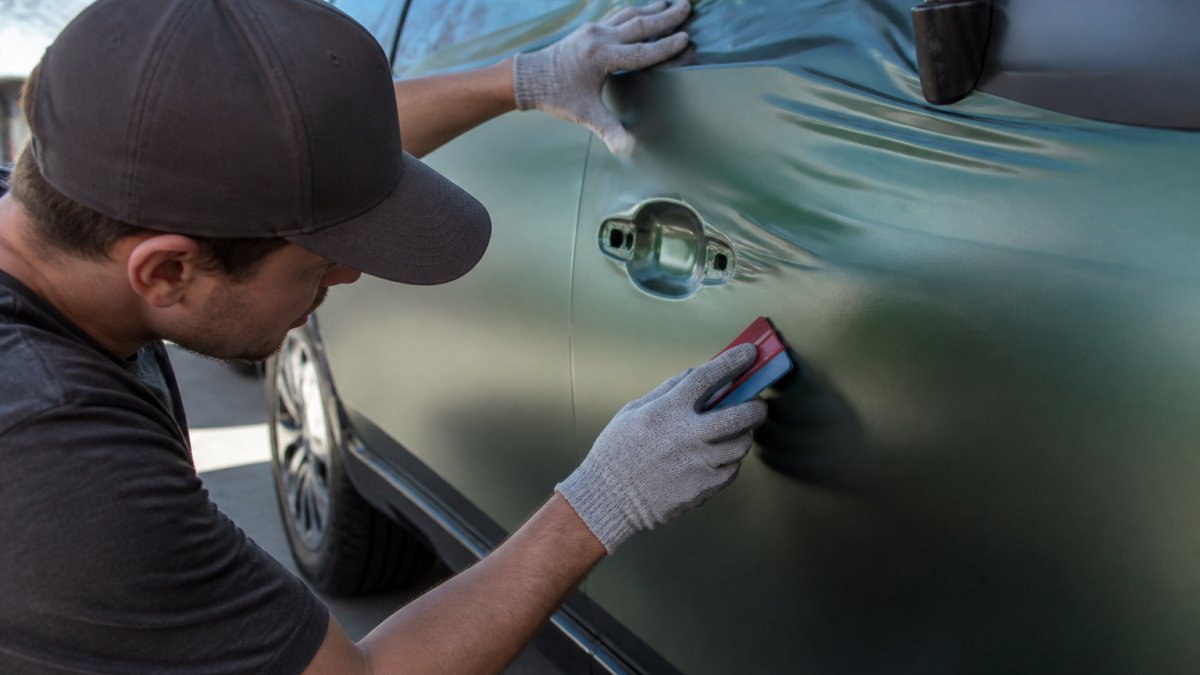
Conformability, the vinyl's ability to stretch around curves without wrinkling, is the primary installation challenge. Cast vinyl excels here because its manufacturing process creates internal stress relief, letting it stretch smoothly around door seams, hood curves, and mirror backs without stress points.
Air-release channels are microscopic ridges on the adhesive side that let trapped air escape during application. RapidAir in the Oracal 970Ra and Easy Apply RS in Avery products both use this principle.
Temperature matters during installation. Vinyl is most conformable between 65-85°F; cold vinyl becomes brittle and resists stretching, while hot vinyl becomes too tacky to position. Professional installers heat vinyl slightly before application to improve flow and reduce wrinkles.
Adhesive type affects installation difficulty and long-term durability. Solvent-based adhesives require careful handling and cure time, while pressure-sensitive adhesives activate on contact, allowing repositioning but potentially reducing long-term hold. The best modern formulations balance both: low initial tack for positioning, high final adhesion after 24 hours.
Warranty, Removability, and When to Replace Your Wrap
Most premium vinyl products carry 3-5 year warranties against defects, fading, and adhesive failure under normal use. Read warranty terms carefully, many exclude damage from improper installation, chemical exposure, or maintenance neglect.
Long-term removability is often overlooked. A wrap that permanently damages paint when removed creates liability and customer dissatisfaction. Quality durable vinyl for vehicle wraps maintains removability for 5-7 years, thanks to a clear-coat layer separating adhesive from paint.
When to replace depends on visual degradation and adhesive integrity. Replace when:
- Visible fading exceeds 15-20% color shift (especially noticeable on reds and oranges)
- Edge lift or seam separation appears in multiple locations
- Adhesive loses tack and edges lift easily
- Texture becomes chalky or powdery (sign of UV damage)
- Wrinkles appear that won't disappear with heat application
Don't wait for complete failure. Address early edge lift within months, not years, moisture penetrating under the vinyl accelerates adhesive failure and can damage the vehicle's clear coat.
Selecting durable vinyl for vehicle wraps comes down to matching material performance to your climate, vehicle usage, and budget. Cast vinyl with UV inhibitors delivers the best combination of longevity and conformability for most fleet applications, and the Oracal 970Ra, Avery Supreme Wrapping Film, and Fedrigoni Ri-Jet C50 each serve distinct needs, from budget-conscious shops to premium installers demanding maximum performance.

At McLogan, we stock all these options and can guide you through the selection process based on your specific application. Our team has worked with wrap specialists and fleet managers since 1922, and we understand the real-world factors that determine wrap success.
Frequently Asked Questions
What type of vinyl is best for durable vehicle wraps?
Cast vinyl is the best choice for durability and long-term applications. Cast vinyl conforms smoothly to curved surfaces, rivets, and complex contours without stretching or wrinkling. Premium cast vinyl with UV inhibitors can last 5-7 years under harsh sun exposure, making it ideal for fleet graphics and outdoor vehicle wraps. Products like the Oracal 970Ra Wrapping Cast feature air-release channels and repositionable adhesives for professional results.
How long does vehicle wrap film typically last?
Premium cast vinyl with UV inhibitors typically lasts 5-7 years in harsh climates. In moderate conditions, durable wraps can extend beyond this range. The Fedrigoni Ri-Jet C50 offers up to 12 years of durability in Zone 1 climates with its pre-stretched cast film technology. Lifespan depends on material quality, UV resistance, climate exposure, maintenance frequency, and whether a protective laminate is applied over the vinyl.
Is cast vinyl more durable than calendared vinyl for vehicle wraps?
Yes, cast vinyl is significantly more durable than calendared vinyl. Cast vinyl is manufactured through a casting process that creates a thinner, more stable film with superior conformability and longevity. Calendared vinyl is produced by compressing layers, making it thicker but prone to shrinkage and less suitable for long-term outdoor exposure. For fleet graphics and permanent installations, cast vinyl delivers better durability and performance on curved surfaces.
How do you maintain vinyl wrap to prevent fading and peeling?
Clean your vehicle wrap regularly with mild soap and water, avoiding abrasive scrubbers that damage the film surface. Dry with soft microfiber cloths to prevent water spots. Park in shade when possible and apply protective sealants designed for vinyl wraps to maintain color vibrancy and UV resistance. Avoid pressure washers on high settings, as they can lift edges. Inspect seams and edges monthly for peeling, and address damage promptly to prevent moisture infiltration that accelerates failure.
Can textured vinyl wrap be used for full vehicle wraps?
Yes, textured vinyl wrap can be used for full vehicle wraps, though it requires more skill during installation due to reduced air-release capabilities. Textured finishes like carbon fiber add visual depth and hide imperfections better than smooth finishes, making them popular for custom wraps. However, textured films conform less easily to complex curves and rivets than smooth cast vinyl. They work best on relatively flat panels or as partial wraps for accent graphics, paired with smooth vinyl for curved sections.


