

Last Updated: November 5, 2026
Quick Summary
The best application tape for large format vinyl decals matches tack to the job: low tack for large prints and textured films, medium tack for general cut vinyl and printed decals, and high tack for small lettering and rough surfaces. Choose a roll slightly wider than your graphic's shortest dimension so you can cover it in one pass.
- Low-tack transfer tape resists marking, stretching and lifting during transfer of large-format graphics.
- A 46-inch-wide decal can use a 50-inch roll to avoid piecing strips together.
- Apply transfer tape in four steps: lay flat, align square, press from center outward, then burnish twice.
- A medium-tack carrier often works better than high tack on air-release film.
- Clear film carriers suit multi-color overlays because you can see registration marks through the tape.
Table of Contents
- What Separates Application Tape From Transfer Tape
- Low-Tack Transfer Tape for Vinyl: When Less Grip Wins
- Wide Application Tape for Large Decals: Roll Width and Length
- How to Apply Transfer Tape to Large Vinyl Decals
- Oracal Transfer Tape Compatibility and What to Check
- The Four Tapes Worth Stocking for Large-Format Work
- Pick the Right Application Tape for Your Next Decal Job
- Frequently Asked Questions
What Separates Application Tape From Transfer Tape
Application tape is a paper or film carrier coated with a pressure-sensitive adhesive that picks up cut vinyl from its release liner and holds it in register during installation. Transfer tape does the same job, but the terms split by intent: "application tape" is the sign shop's general-purpose carrier for cut lettering and graphics, while "transfer tape" often refers to the film used to move a graphic from liner to substrate in one clean pass.
The distinction matters when you order. A paper carrier tears cleanly and lays flat, which suits plotter-cut lettering. A clear film carrier lets you see registration marks through the tape, which suits multi-color overlays and printed decals. Getting this wrong is the most common reason a transfer job fails before it reaches the substrate.
The global printable self-adhesive vinyl films market is projected to grow from $3.9 billion in 2026 to $5.1 billion by 2030, according to Grand View Research's printable vinyl films market report, which means more printed decals moving through shops that need a compatible carrier on hand.
Low-Tack Transfer Tape for Vinyl: When Less Grip Wins
Low-tack transfer tape is the safer choice for large-format graphics because it resists marking, stretching and lifting during transfer, according to MPI Matco's guide to picking the right tack level. The lower adhesion lets the carrier release from the vinyl without pulling the graphic out of position.
That said, low tack is not automatically better. The lesson: match tack to the job, not to a habit.
Here is how the three levels sort:
| Tack Level | Best For | Watch Out For |
|---|---|---|
| Low tack | Large prints, textured films, delicate laminates | May not hold small fine detail |
| Medium tack | General cut vinyl, printed decals | Can lift on tight-release liners |
| High tack | Small lettering, rough or textured surfaces | Can stretch thin cast films |
The Rtape Clear Application Tape AT65 High Tack is one high-tack clear carrier option to compare against a low-tack roll before committing.

Wide Application Tape for Large Decals: Roll Width and Length
Wide application tape exists so you can cover a large decal in one pass instead of piecing strips together. But roll sizing is also where large-format shops quietly lose money, because the wrong width turns a one-pass job into a two-pass job with overlap waste.
Start with the graphic's shortest dimension. A roll slightly wider than the graphic avoids piecing, so a 46-inch-wide decal can use a 50-inch roll. If your widest common job is 48 inches and you stock 48-inch tape, you will be piecing every one of those jobs. Order the next size up instead.
Roll length is a cost-per-project question, not just a shelf-space question. A 100-yard roll lowers your cost per square foot on high-volume runs, but paper carriers absorb moisture and can dry out or curl at the edges over time, so a long roll that sits for a year is not actually cheaper.
Here is how the width and length trade-offs sort out for large-format work:
| Job Pattern | Roll Width | Roll Length | Trade-Off |
|---|---|---|---|
| Full-bleed panels up to 48 in | 50 in or wider | 100 yd | Highest upfront cost, lowest waste per panel |
| Mixed panels and lettering | One wide + one narrow | 100 yd wide, 50 yd narrow | Two SKUs, but no piecing on big jobs |
| Occasional or low-volume | Narrow only | 50 yd | Cheaper to buy, more labor per large job |
| Production runs | Widest your rack holds | 100 yd | Best cost per square foot, needs climate-controlled storage |
Watch out: buying narrow rolls to save money usually costs more in labor once you start overlapping strips on a big print, because every overlap is a potential bubble line and a second burnish pass.
Store rolls flat, away from heat and direct sun, and rotate stock so older rolls get used first. Label the receipt date on each roll so you know which one to use next.
How to Apply Transfer Tape to Large Vinyl Decals
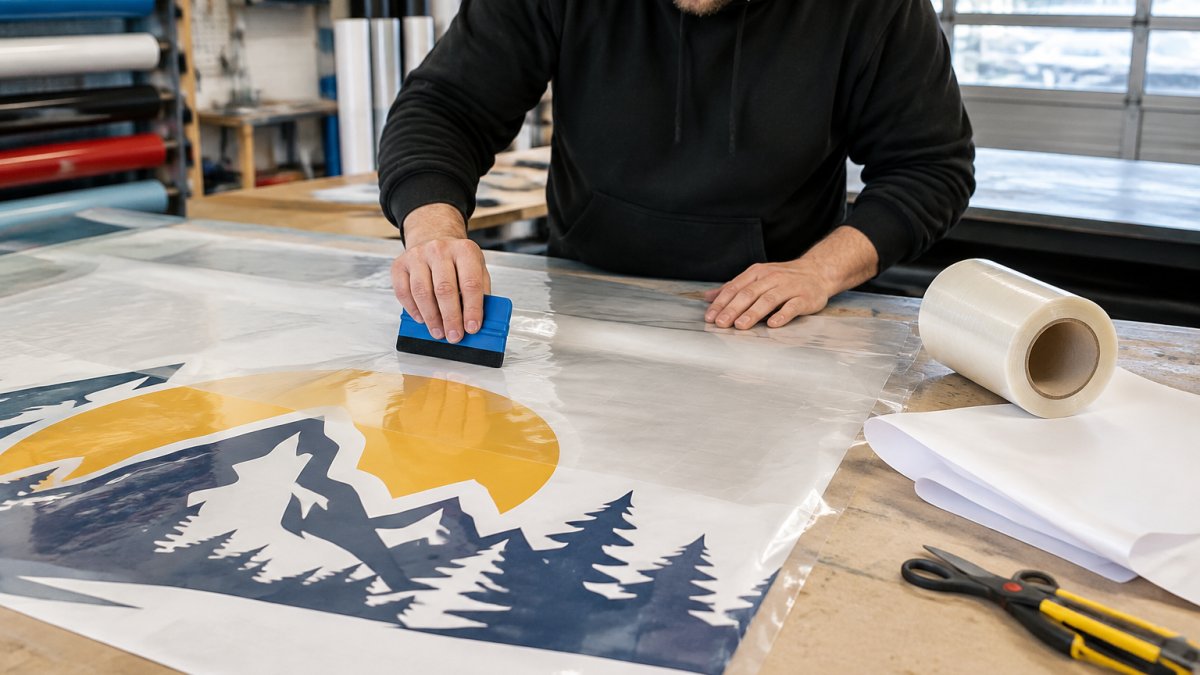
Applying transfer tape to a large decal is a four-step job: lay the graphic flat, align the tape, press it down evenly, and burnish before you lift.
- Lay the decal flat on a clean, hard surface. Trim excess backing paper so the tape can reach the liner edges.
- Align the tape square to the graphic. Start at one corner and let the roll unroll across the decal rather than stretching it.
- Press from the center outward. Use a squeegee in overlapping strokes to push air ahead of the tape.
- Burnish the full surface. Go over the tape twice, then lift a corner to confirm the vinyl is picking up cleanly.
A roller applicator takes the hand pressure out of step three and keeps the tape square on long runs. Our vinyl roller tray app tape applier is built for exactly this pass on wide decals.
Watch out: pressing the tape down before it is square locks in a misalignment you cannot fix without peeling the whole sheet.
Oracal Transfer Tape Compatibility and What to Check
Oracal transfer tape compatibility comes down to three checks: the vinyl's release liner, the film's finish, and the tack level. Oracal cast and calendered films behave differently, and a carrier that grabs one cleanly can fight the other. The failure usually shows up as the vinyl lifting off the liner before it reaches the substrate, or as the carrier releasing unevenly and leaving the graphic skewed.
Check the liner first. Tight-release liners need a firmer adhesive to pick up the graphic; loose liners release easily and suit a medium tack. A carrier that is too weak for a tight liner will pick up the edges but leave the center behind, which is the classic partial-transfer failure on large panels.
Rtape Clear Application Tape AT65 High Tack →
Air-release liners and films are designed to let trapped air escape during application, and that same structure can reduce the contact area the carrier adhesive has to grab.
Textured films add a second problem: the carrier adhesive has to conform into the texture to hold, and then release without pulling the texture flat or leaving residue in the valleys. A clear film carrier with a controlled adhesive is usually the safer choice here than a paper carrier, which can leave fibers behind on a textured surface.
Finally, confirm the tape's stated shelf life and storage conditions before you buy a large quantity. Adhesive that has built tack in storage releases harder than the spec sheet says, and that is a common cause of lifting on a job that worked fine last month.
For Oracal work specifically, our Oratape MT72 application tape page lists the specs to confirm against your film before ordering. Run a test panel with the actual vinyl, liner, and carrier combination before a production run, and check for residue, lifting, and skew after release.
The Four Tapes Worth Stocking for Large-Format Work
The four tapes worth stocking cover the full range of large-format jobs: a clear high-tack film, a paper high-tack workhorse, an economy paper tape, and a medium-tack clear grid tape. Stocking one of each means you rarely stop a job to order.
Rtape Clear Application Tape AT65 High Tack ($13.50) is suited to printed decals and multi-color overlays. The matte polypropylene film gives exceptional clarity for registration, and the acrylic adhesive is designed not to build tack during extended storage. Its listed shelf life is one year when stored at 72°F and 50-55% relative humidity.
Rtape Application Tape 4075 RLA High Tack ($13.35) is the all-purpose paper tape for small and medium plotter and die-cut graphics. Its lay-flat performance resists wrinkling, tunneling and edge curling when graphics are rolled or stacked for shipping. Widths run from 1.25 to 60 inches in 100-yard rolls.
Sign High Tack Application Tape ($9.45) is a paper option. The impregnated paper carrier holds shape in wet applications, and the UV-stabilized natural rubber adhesive bonds well to cast and calendered PVC films, including rough surfaces like etch glass and effect films.
Transfer Rite Application Tape 310G Medium Tack ($15.90) is a clear grid tape for jobs where you want to see alignment through the carrier without the grip of a high-tack film.
Browse the full transfer tape category to compare widths and tack levels side by side.
Pick the Right Application Tape for Your Next Decal Job
Match the tape to the decal. Low tack suits large prints and textured films; high tack suits small lettering and rough surfaces. Multi-color overlays want a clear carrier so you can see registration. Printed decals with air-release backing are typically applied dry rather than wet, according to Jessup Manufacturing's guide to decal film printing and application, so pick a carrier that releases cleanly without solution.
Laminated large-format decals are rated to resist UV, moisture and chemicals for up to 10 years, per Printastic's large-format decal overview. A carrier that leaves residue or lifts the laminate undermines that lifespan on day one.
Once the decal is down, protecting it is the next job. Our guide on how to prevent vinyl signage fading covers the materials and placement decisions that keep finished graphics looking right for years.
Frequently Asked Questions
What is the best application tape for vinyl decals?
There is no single best application tape for every job. Match the tape to the vinyl and the surface: low tack for large prints and delicate films, medium tack for everyday cut vinyl and air-release media, and high tack for small lettering with tight release liners. Paper tape suits flat, short-term transfers; clear film helps with multi-color registration and wet applications.
Should I use paper or clear application tape for large decals?
Paper tape is cheaper and tears cleanly, which makes it a workhorse for small and medium cut graphics. Clear film earns its place on large decals because you can see the graphic underneath for alignment and multi-layer registration, and it resists stretching during wet application. For big printed panels, clear film usually saves more time than it costs.
How do I choose the right tack level for application tape?
Start with the vinyl and the surface. Low tack protects large prints, textured films, and delicate surfaces from marking or lifting. Medium tack handles most cast and calendered vinyl, including air-release media. High tack is for small lettering, tight release liners, and rough surfaces like etch glass. When in doubt, test a scrap before committing a full roll.
How wide should application tape be for a large vinyl graphic?
The tape should cover the graphic with a few inches of overlap on each side so the squeegee never catches an edge. Wide rolls reduce seams on large decals, but they cost more and are harder to handle solo. Many shops stock a wide roll for panels and narrower rolls for lettering, then cut to length to limit waste.
Can application tape be reused?
Usually not. Once the adhesive picks up dust, liner residue, or vinyl fibers, grip drops and the next transfer risks lifting or bubbles. High-tack tapes may survive one careful re-application on a clean surface, but the savings rarely justify the risk on a paid job. Treat tape as a one-time consumable and budget accordingly.
Your next large-format job deserves a carrier that will not fight you at the table. McLogan has supplied sign shops and printers since 1922, with a team that knows the difference between a paper workhorse and a clear registration film, and a catalog stocked to cover both. Get started with McLogan and order the application tape that matches your next decal job.


